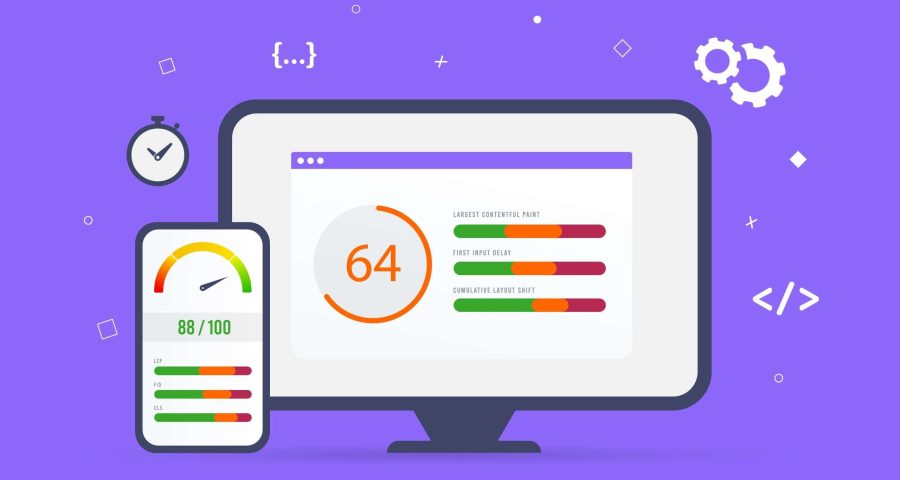

Your website’s speed, also known as load time or “PageSpeed”, is a critical factor for user experience, search engine optimization, and conversion rates. Loading speed affects user experience because it acts as the first impression of your website to your users. Slow loading times result in higher bounce rates, meaning users will leave your website immediately upon entering. Website speed affects search engine optimization because Google and other search engines use PageSpeed as a rankings factor, meaning the faster your website is, the higher it may rank on search engine results pages. Finally, website speed is crucial for conversion rates, as users expect websites to load in just seconds. If your website takes more than just 2 or 3 seconds to load, you can expect your conversion rate to plummet. In this article, we’ll discuss three simple strategies for improving your website’s loading speed! For more information or for assistance improving your website’s PageSpeed and Core Web Vital scores, please contact our team at Boston Web Marketing today for a free website audit!
Utilize Caching Plugins
One of the simplest and easiest ways to improve your website’s loading speed is to install and utilize a caching plugin. Caching plugins work by creating pre-generated HTML files so that the server does not need to build each page from scratch every time it gets visited. By minimizing server load and boosting Core Web Vital scores like Largest Contentful Paint (LCP), First Contentful Paint (FCP), and First Input Delay (FID), caching plugins can improve your website’s loading speed.
Enable Lazy Loading
Lazy loading is a webpage loading strategy that waits to load certain elements of the page until they are needed. For instance, if you have a large image toward the bottom of the webpage, lazy loading would prevent this image from rendering until the browser needs it, therefore improving the loading speed of the elements toward the top of the page. There are a few different ways to implement lazy loading on your website: through plugins, JavaScript, or HTML attributes.
Compress & Optimize Images
One more strategy (that we’ll mention in this article) to improve your website’s loading speed is to compress and optimize images. Images are typically one of the most important resource-intensive elements of a website, so compressing and optimizing them is crucial for PageSpeed optimization. In order to compress and optimize the images on your website, you can use compression tools that are available on the web, use image compression plugins (for WordPress sites), or use a Content Delivery Network (CDN) to serve images from servers that are closest to the user.
Contact Boston Web Marketing!
If you have any additional questions about website speed optimization or if you’d like assistance boosting your website’s rankings in the search results, please contact our team at Boston Web Marketing today! Our SEO specialists help businesses in virtually every industry achieve higher search results and gain more leads! Give us a call today at (857) 526-0096 or fill out the contact form on our website, and we’ll get back to you as soon as possible!